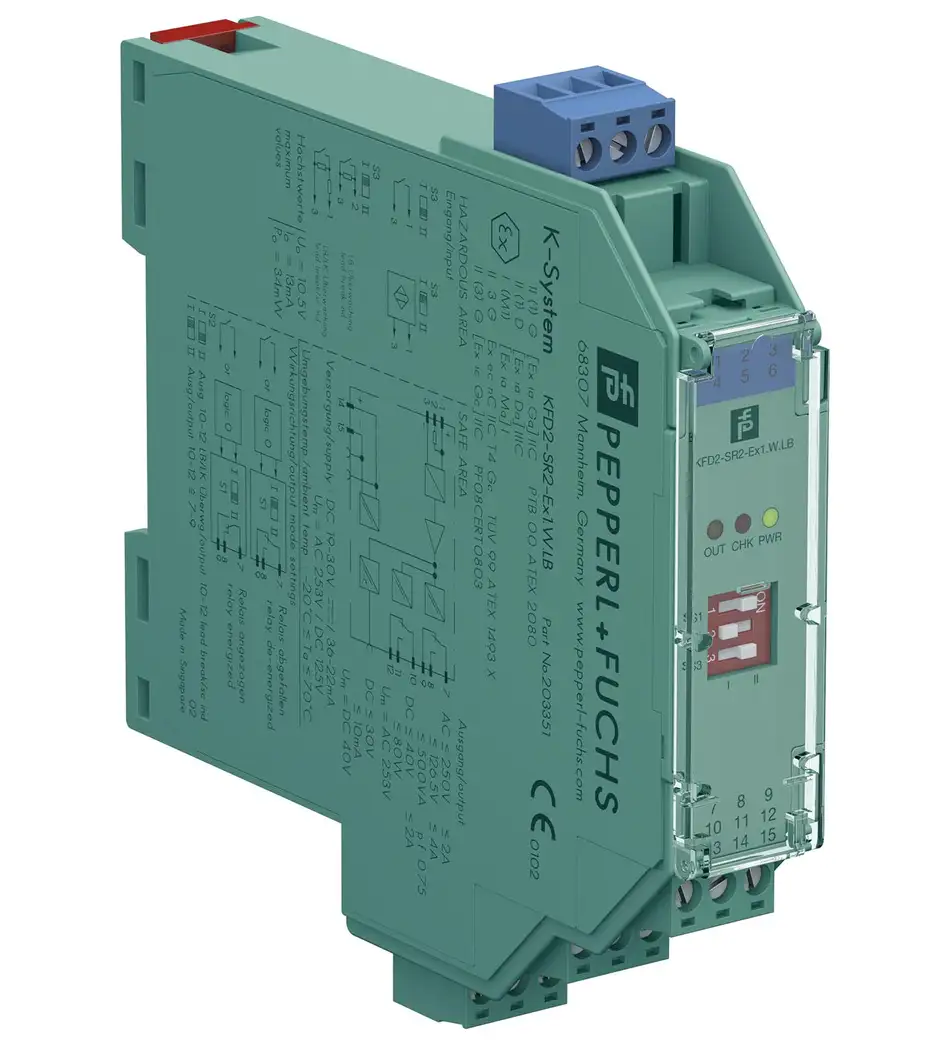
Pepperl+Fuchs / Paired Relay Channel Schedule
KFD2-SR2-EX2.W combines two Pepperl+Fuchs field input channels with relay outputs in one isolated barrier. The main documentation task is keeping both channel identities clear. This article uses a paired schedule to support panel assembly, stores descriptions, and replacement planning for circuits that share a housing but serve separate field tags.
Give each channel a complete identity
Start with the field tag, sensor reference, cable identifier, and receiving input for channel one. Then repeat the same exercise for channel two. This method makes missing information visible before the module reaches the workshop. Also, state whether the two channels belong to the same equipment package or different process functions.
KFD2-SR2-EX2.W operating outline
The official specification identifies two isolated channels, NAMUR or dry contact inputs, relay contact outputs, and a 24 V DC supply arrangement. Reversible operation and line fault detection are also listed. Use these features to frame the review, while the complete datasheet remains the reference for electrical limits and connection details.
Compare contact duties independently
Two channels in one housing can switch different receiving loads. Therefore, review each contact duty on its own. Record the control voltage and current, then compare them with the permitted ratings. In addition, identify the contact arrangement on the drawing. This prevents a familiar channel from masking an unsuitable duty on the adjacent circuit.
Check settings against the channel schedule
Before commissioning, align the operating direction of each channel with its intended process state. Then compare the line fault response with the alarm documentation. Use an approved test sequence that records both field and control indications. The completed schedule becomes useful evidence for later maintenance and helps stores distinguish the exact installed version.
Issue a precise purchase description
- Keep the full Ex2.W code and existing article number.
- State the module quantity separately from the number of field points.
- Add the cabinet allocation, destination, and documentation requirement.
For example, a schedule containing four field points does not automatically mean four modules. A clear quantity basis makes the request easier to quote and check at goods receipt.