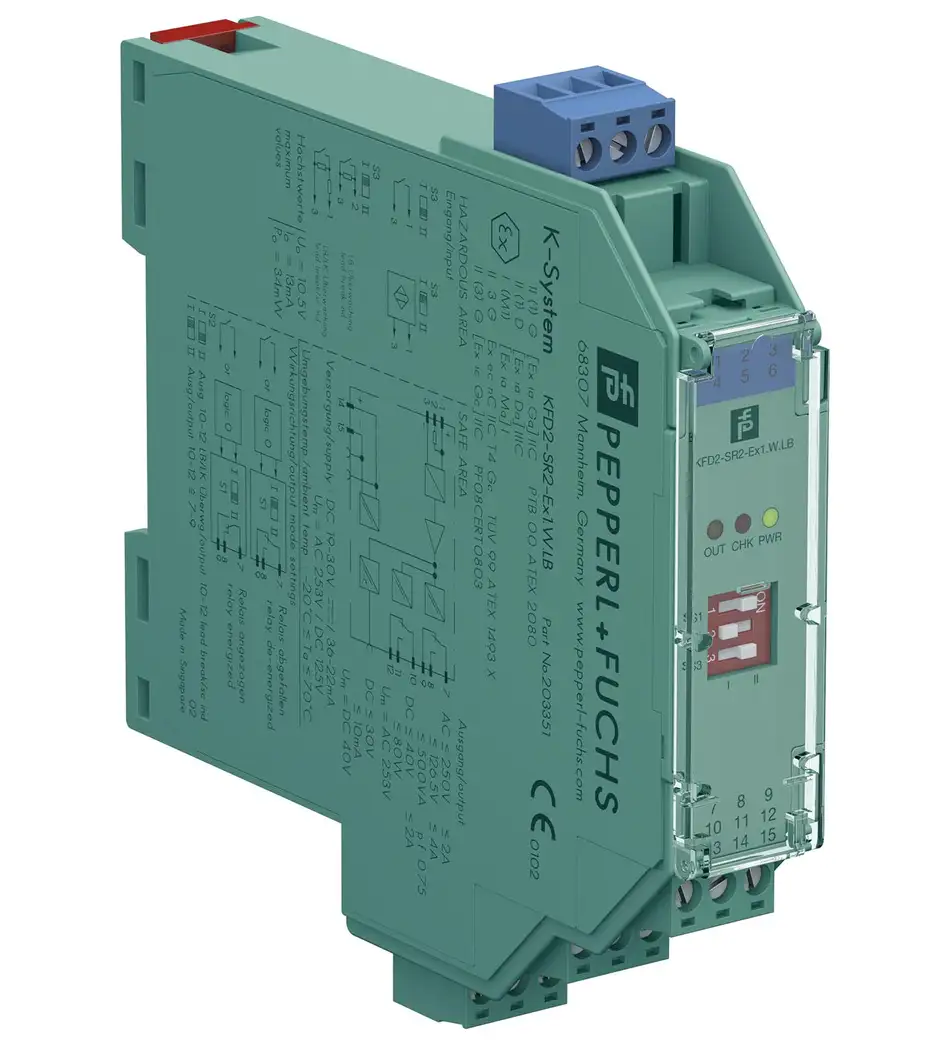
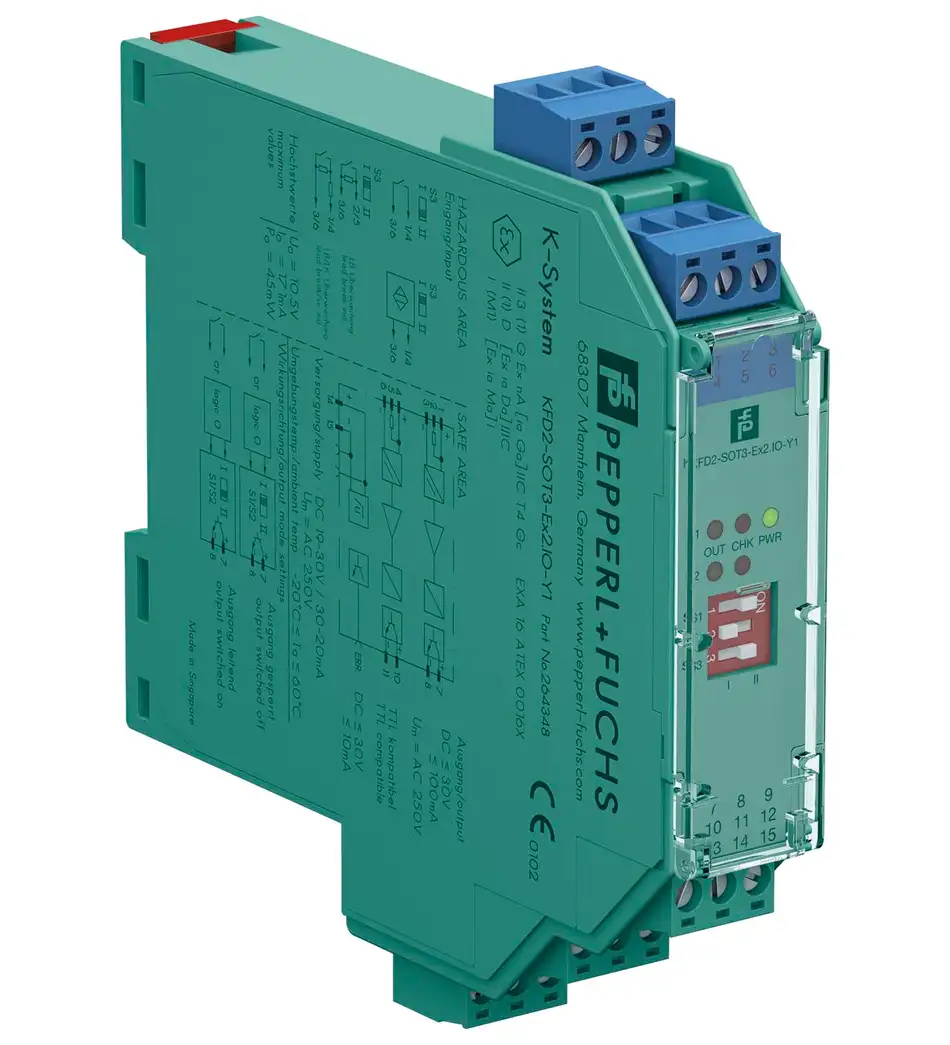
Pepperl+Fuchs / Shared Terminal Input Design
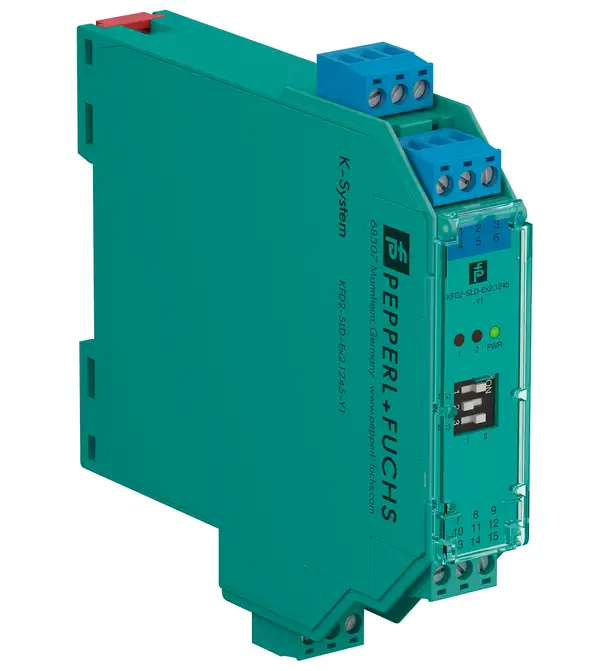
KFD2-SOT3-EX2 is a Pepperl+Fuchs two-channel switch amplifier with passive transistor outputs. Its practical selection issue is the control-side connection arrangement. This guide uses a channel-map approach to help panel designers and maintenance teams compare the interface with their receiving inputs before they request a replacement or additional modules.
Map both field channels first
The unit accepts NAMUR sensors or dry contacts on its two field channels. First, assign each input a unique tag and destination. Then trace the tags through the marshalling drawing. This simple exercise helps expose duplicated descriptions and crossed references before a spare enters stores or a new panel reaches the workshop.
KFD2-SOT3-EX2 terminal relationship
Official data assigns output I to terminals 7 and 8, and output II to terminals 8 and 9. The outputs therefore share terminal 8 in this arrangement. Include that relationship in the drawing review. In particular, verify compatibility with the receiving circuits rather than assuming that every two-channel transistor barrier has independently isolated outputs.
Choose the interface by electrical behavior
Passive transistor outputs differ from active voltage outputs and relay contacts. Consequently, the control card reference belongs in the selection file. Check the external supply and input requirements against the complete datasheet. Also, consider the required signal timing. A matching channel count alone leaves important electrical questions unanswered.
Keep setup visible to the next technician
- Record the operating direction for channel one and channel two.
- Identify the intended use of line fault detection.
- Label the control inputs with the corresponding field tags.
The product provides reversible operation and fault monitoring. Therefore, settings and alarm interpretation should travel with the loop documentation instead of remaining only in a technician memory.
Order the version that the drawing describes
Use the complete designation on the inquiry, order line, and goods receipt record. If an .IO version appears in an offer, ask engineering to review its output arrangement separately. In addition, specify the quantity and destination for the quotation. This keeps a sourcing discussion aligned with the actual cabinet architecture.