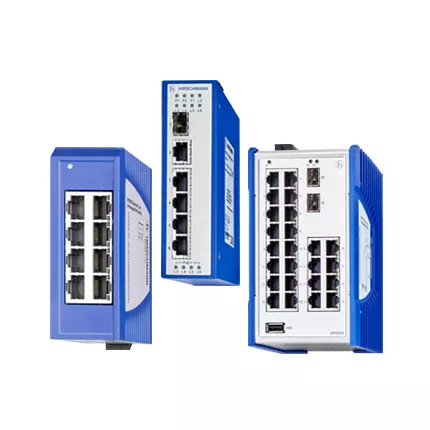
SPIDER PL30 SFP switch: commissioning and exact-code guide
SPIDER-PL-30-24T1O6O699TZ9HHHV is the complete Hirschmann designation for a high-density Premium Line layout with flexible optical uplinks. This new SPIDER PL30 SFP switch article uses a commissioning-evidence format for port planning, media checks, receiving control, startup, and purchasing.
First, copy the full model from the nameplate or approved project document. Next, retain the exact string in quotations, drawings, labels, and test records. Finally, release a similar variant only after engineering records why every difference is acceptable.
Exact-Code And Substitution Boundary
Preserve every letter, digit, and placeholder in the submitted order code. In particular, SY9, TY9, SZ9, and Y9 should not be normalized automatically. A substitute requires a written comparison of port count, port speed, media, connector, optical reach, supply, temperature, approvals, housing, and complete suffix.
PL30 Uplink Architecture
Treat the two optical positions as an engineered uplink pair and record which transceiver belongs to each route. The requested SPIDER-PL-30-24T1O6O699TZ9HHHV belongs to the Hirschmann SPIDER III Premium Line high-density uplink family and is a fanless unmanaged industrial DIN-rail switch with optical expansion. The official SPIDER Premium Line documentation includes the submitted PL30 order code. The complete designation controls port speeds, SFP positions, supply, environment, and approval package, so the nameplate and project list remain the acceptance authority.
First, define every endpoint and the upstream path. Next, assign responsibility for cable, optical, supply, and acceptance evidence. Therefore, a visually similar switch cannot enter service merely because its front panel appears suitable.
Dual-Uplink Commissioning
Bench-test both optical uplinks separately, confirm the intended port rate, and repeat the test after a controlled power cycle. However, similar PL20 and PL30 labels do not prove equal uplink behavior, and an unverified transceiver can leave the remote path dark. Consequently, stop the release whenever a mandatory identity, media, environmental, or performance check fails.
SPIDER PL30 SFP switch Approval Gate
Review copper endpoint count, both SFP positions, supported transceivers, uplink speed, USB configuration, power arrangement, suffix, temperature, approvals, and exact revision. Then, compare the received unit with the purchase order, old device, network drawing, and official SPIDER reference. Finally, document every accepted difference before installation.
PL30 Acceptance File
Keep the following evidence with the final cabinet record. In addition, retain the nameplate image, project drawing, test date, firmware-independent settings where applicable, and the name of the approving engineer.
Evidence 1: PL30 nameplate
Evidence 2: Uplink speed evidence
Evidence 3: Optical module labels
Evidence 4: Recovery test result
Related Hirschmann SPIDER Models
These models may support a broader spare or network review, but they are not automatic replacements. Compare every interface, data rate, fiber medium, connector, environmental suffix, approval, and order-code character before changing the request.
SPIDER-PL-20-24T1Z6Z699TZ9HHHV
SPIDER-SL-20-01T1S29999SZ9HHHH
SPIDER-SL-20-04T1M49999SY9HHHH
SPIDER-SL-20-04T1M49999TY9HHHH
SPIDER-SL-20-05T1999999SZ9HHHH
Stock, Price, And Delivery Request
Send HKXY Instruments the quantity, destination, required date, old label, port schedule, fiber details, and allowed-alternative policy. We can review SPIDER-PL-30-24T1O6O699TZ9HHHV, check availability, price, lead time, packing, and delivery. Meanwhile, compare the request with the official Hirschmann SPIDER configurator.